Tub to Shower Conversion in Charlotte: What It Really Costs and Where to Save Without Regrets
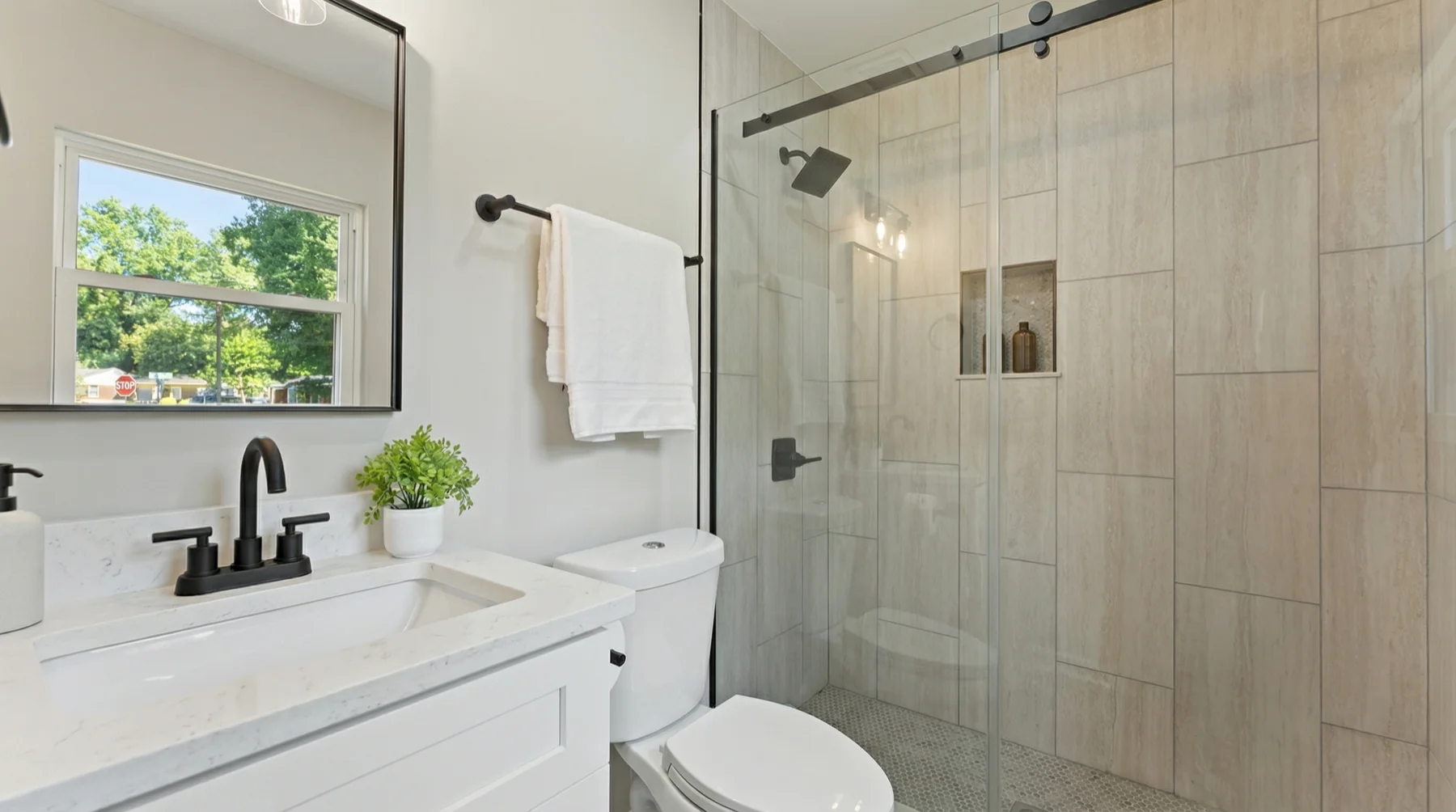
A tub to shower conversion in Charlotte costs anywhere from under $3,000 to more than $20,000. The gap comes down to three things: what the base and walls are made of, whether the drain moves, and whose brand is on the truck.
Angi puts the Charlotte average around $2,919. One of the most visible one-day acrylic companies in town publishes packages from $8,500 to $21,591. Both numbers are real. They just describe different jobs.
Below you’ll find the three paths side by side, where you can save without regrets, what we never cut, what permit applies in Mecklenburg and Union County, and what to ask before you sign anything.
Is Replacing Your Tub With a Shower a Good Idea?
For most homes, yes, as long as another tub stays in the house. A walk-in shower is easier to step into, easier to clean and uses floor space better than a tub you rarely fill.
The resale risk is real only when you remove the last tub. HomeAdvisor and home inspection guides agree on this point: families with young kids look for at least one tub, and a house with none can lose some of those buyers.
So the rule is simple. If your primary bath has the only tub, think twice. If the hall bath keeps its tub, convert the primary with confidence.
A walk-in shower has a few downsides worth knowing:
- An open glass panel lets more warm air escape, so the shower can feel cooler.
- Glass needs a quick squeegee to stay clear.
- Small kids and dogs are harder to bathe without a tub.
How Much a Tub to Shower Conversion Costs in Charlotte
Here’s where the money actually goes. There are three common paths, and they don’t overlap much in price.
| Path | Typical cost | Time on site | Best for |
|---|---|---|---|
| Acrylic or fiberglass kit, installed | $2,000 to $6,000 (national, This Old House) | 1 to 3 days | Guest bath, rental, tight budget |
| One-day acrylic system (franchise) | $8,500 to $21,591 (published Charlotte packages) | 1 to 2 days | Speed, no grout lines, brand warranty |
| Custom tile shower | $6,000 to $12,000; curbless $8,000 to $15,000 (national, This Old House) | 3 to 7 days or more | Primary bath, your own design, resale |
Notice something: the one-day franchise system often costs more than a custom tile shower. You’re paying for speed, the brand, the sales team and a long warranty. That can be worth it for you, but it should be a choice you make with both numbers in front of you.
Why two quotes for the same bathroom don’t match
Most of the gap comes from a few line items. According to This Old House’s 2026 cost guide:
- Moving the drain: $900 to $1,100
- Replacing the shower valve: $700 to $1,200
- Framed glass: $400 to $1,200
- Frameless glass: $1,200 to $3,000
Then there’s what nobody can see until the tub comes out. In a This Old House survey, 37% of people spent more than they planned, and the guide recommends holding 10% to 20% of your budget for surprises behind the wall.
For the full picture of a bathroom budget, including vanities, tile and labor, see our Charlotte bathroom remodel cost guide.
Want a real number for your bathroom instead of a national range? We walk the bathroom with you and write the estimate line by line, so you see where every dollar goes. Request your in-person estimate or see what our bathroom remodeling in Charlotte covers.
One-Day Acrylic vs. Custom Tile: An Honest Comparison
Both can give you a good shower. They solve different problems, and the right one depends on how long you’ll stay in the house and what’s behind your current walls.
| One-day acrylic | Custom tile | |
|---|---|---|
| Install time | 1 to 2 days | 3 to 7 days or more |
| Grout lines | None | Yes, sealed and cleaned over time |
| Look | Set colors and patterns | Any tile, niche, bench or size |
| What’s behind the wall | Depends on the installer | Membrane installed and tested |
| Repairs later | Usually a full panel | A section of tile |
| Price | Packages from $8,500 in Charlotte | $6,000 to $12,000 nationally |
The biggest fear we hear about one-day systems is that the acrylic gets glued over whatever is underneath. Some systems do install a liner over the old tub or wall. Ask the installer exactly what comes out, what gets inspected, and what happens if they find soft wood.
A custom tile shower takes longer because each layer needs time: the base, the waterproofing membrane, the water test, the tile and the grout. That cure time is what keeps water out of your walls for years.
Where You Can Save Without Losing Quality
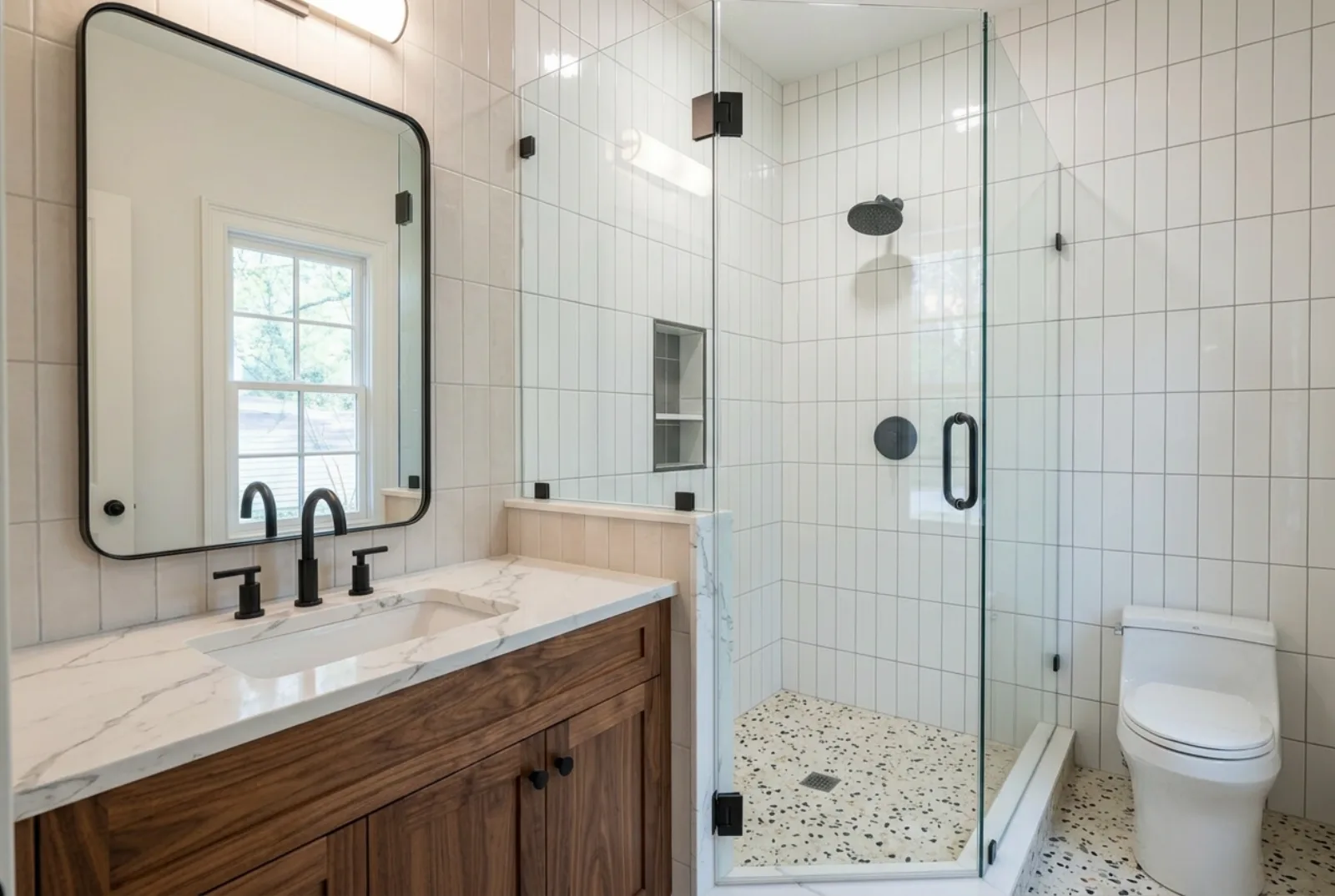
If you’re going to save somewhere, save here. None of these choices shortens the life of your shower.
Keep the drain where the tub was
Moving the drain is one of the most expensive line items, at $900 to $1,100 according to This Old House. A shower that sits in the tub’s footprint keeps the drain, the floor and the walls mostly where they are.
Use the tub’s footprint for a standard base
Most tubs sit in a 60-inch alcove, and prefabricated shower bases are made for that size. A standard base costs less than a custom tiled floor and has no grout on the floor, where leaks tend to start.
Mix an acrylic base with tile walls
On a tight budget, this mix gives you the best of both. You get a one-piece base where water sits, and tile walls where you want the look. Solid surface wall panels are another option if you never want to scrub grout again.
Pick framed glass
Frameless glass looks great and can cost two to three times more. A framed door at $400 to $1,200 does the same job and still looks clean.
Spend on one detail you’ll see every day
Put the money into one thing you’ll notice every day: a niche, a bench or a nicer valve trim. Mid-range tile with one good detail reads better than expensive finishes everywhere.
Decide everything before you start
Every change after demo day costs money and days. Pick the tile, the base, the valve, the trim and the glass before work begins.
We started in 2019 fixing small things around the house. As clients called us back for bigger jobs, we learned that a bathroom remodel is won or lost before demo day. Now every decision gets made, priced and written down first.
Where You Should Never Cut Corners
This is the part we don’t cut corners on. Saving here is how a new shower turns into a bigger repair a few years later.
- Waterproofing. A continuous membrane behind the tile and a water test before the tile goes on. According to This Old House, poor waterproofing can lead to hidden leaks, mold and costly repairs.
- Pipe work by a licensed plumber, with a permit when the layout changes. We coordinate the plumber so you don’t have to.
- A pressure-balancing or thermostatic valve if the valve gets replaced. It keeps the water from turning scalding when someone flushes, and model building codes require one on new shower valves. Your plumber will confirm what applies to your house.
- Checking the subfloor and walls once the tub is out. Old leaks often leave soft wood that needs fixing before anything new goes in.
- Blocking for grab bars inside the wall, even if you don’t install bars today. Adding it later means opening finished tile.
Do You Need a Permit in Charlotte, Mecklenburg or Union County?
Often you don’t, but it depends on what moves. North Carolina law (G.S. 160D-1110) exempts many projects of $40,000 or less on a single-family home from permits, unless the work adds, repairs or replaces load-bearing structure, adds or redesigns the pipes, or adds, replaces or redesigns the wiring or the heating and cooling system. Swapping a light fixture or an outlet for the same kind doesn’t count.
In practice, that usually looks like this:
- Shower in the same spot, same drain, same valve location: often no permit, but whether swapping a tub for a shower counts as a change is the county’s call.
- Moving the drain, enlarging the shower or relocating the valve: usually a permit for the pipe work, pulled by the licensed plumber.
Mecklenburg County issues separate permits for each trade and offers online permits for homeowners and trade contractors. Union County handles inspections for the whole county except Monroe and Waxhaw, which run their own offices.
If you live in Fort Mill or Indian Land, your rules come from York or Lancaster County in South Carolina, so check with them directly. Wherever you are, confirm your specific project with your plumber or the county before work starts.
Making the Shower Safer for Aging Parents
A lot of conversions start with a parent who had a close call getting over the tub wall. If that’s your reason, a few features matter more than the finish:
- A low-threshold base so nobody has to lift a foot high to step in.
- Grab bars anchored into blocking inside the wall, never into drywall alone.
- A handheld shower on a slide bar that works seated or standing.
- A built-in bench or fold-down seat.
- A non-slip floor, like a textured base or small tile with more grout lines for grip.
- Lever handles that are easy to turn with wet or stiff hands.
Who helps pay for it
Original Medicare does not cover a tub to shower conversion, because it counts as a home modification. According to the National Council on Aging, some Medicare Advantage plans include a home safety allowance, and the amount varies by plan. Call the plan and ask.
Veterans may qualify for the VA’s Home Improvements and Structural Alterations (HISA) grant. It’s a lifetime benefit of up to $6,800 for a service-connected disability (or for any disability if you have a service-connected rating of 50% or more) and up to $2,000 for other disabilities.
HISA requires a prescription from a VA physician, a before photo and a written, itemized estimate covering labor, materials, permits and inspections. Ask your contractor for the estimate in that format from the start.
Be careful with ads for a “free walk-in shower.” Read the fine print and ask what the real price is before anyone measures your bathroom.
What to Ask Before You Sign an Estimate
Ask for every answer in writing.
- A line-by-line breakdown: demolition, pipe work, waterproofing, base, walls, glass and trim.
- Who pulls the permit, if one is needed, and who schedules the inspection.
- What happens if they find damage when the tub comes out, and at what price.
- The brand and model of the valve, the waterproofing membrane and the base.
- The labor warranty, in writing, and what it covers.
- How many days you’ll be without a shower.
- Who hauls away the old tub and debris.
- The payment schedule, tied to finished stages of the work.
One more thing: a price that expires tonight is a sales tactic. A fair quote will still be fair after you compare it with another one. Take it home, read it, and ask questions.
If you’re comparing your options for a full bathroom, our bathroom remodeling services page shows what we take on, and our project gallery shows finished work around South Charlotte.
How Long It Takes and How to Plan If It’s Your Only Bathroom
| Path | Typical time |
|---|---|
| Acrylic or fiberglass kit | 1 to 3 days |
| One-day acrylic system | 1 to 2 days |
| Custom tile shower | 3 to 7 days |
| Curbless or larger tile shower | A week or more |
Times come from This Old House and published installer timelines. A permit or a surprise behind the wall can add days.
If it’s your only bathroom, there’s good news. In most conversions only the shower is out of service, and the toilet and sink usually keep working.
A few things make those days easier:
- Have the base, valve, tile and trim on site before demo. One back-ordered part can keep your shower out longer than planned.
- Ask for the no-shower days in writing, and line up a gym, a neighbor or family for those days.
- Schedule the work for a week without travel or guests.
Thinking about doing the kit yourself? It can work in a guest bath if you’re handy, but the waterproofing and the valve are where DIY jobs go wrong. Our guide on when to DIY and when to call a pro can help you decide.
Get a Real Number for Your Bathroom
Ranges only get you so far. The fastest way to know what your conversion costs is to have someone look at your tub, your walls and your drain.
We’ll come to your home, walk the bathroom with you, and give you a written estimate with every line spelled out. When the job needs a licensed plumber, we coordinate it. iFIXX is locally owned and insured.
Request your in-person estimate, or call or text (980) 391-6833. We work in Ballantyne, Pineville, Matthews, Mint Hill, Waxhaw, Weddington and across South Charlotte.
Tub to Shower Conversion in Charlotte: Common Questions
How much does it cost to convert a tub to a shower in Charlotte?
Angi puts the Charlotte average around $2,919. A custom tile shower runs $6,000 to $12,000 nationally according to This Old House, and one-day acrylic packages sold in Charlotte are published from $8,500 to $21,591. The price depends on the base and wall material, whether the drain moves, and the brand behind the install.
Does a house lose value with no tub?
It can, if the shower replaces the only tub in the house. Families with young kids often want at least one tub, so a home with none can lose some buyers. If another bathroom keeps a tub, converting the second one carries little resale risk.
Do you need a permit to convert a bathtub to a shower in North Carolina?
North Carolina law exempts many projects of $40,000 or less on a single-family home from permits, unless the work adds, repairs or replaces load-bearing structure, adds or redesigns the pipes, or adds, replaces or redesigns the wiring or the heating and cooling system. Whether swapping a tub for a shower in the same spot counts as a change is the county's call. Moving the drain or the valve usually means a permit for that pipe work, pulled by a licensed plumber, so confirm your case with the plumber or the county.
Is Bath Fitter cheaper than a remodel?
Not always. Bath Fitter does not publish prices, but one-day acrylic packages from other companies in Charlotte are published from $8,500 to $21,591, while a custom tile shower runs $6,000 to $12,000 nationally according to This Old House. You pay for speed, the brand and the warranty, so compare both quotes line by line before you decide.
Is $10,000 enough for a tub to shower conversion?
For many conversions in Charlotte, yes, if the drain stays where the tub was. That budget usually covers a standard shower base, tiled or paneled walls and framed glass. Moving the drain, frameless glass or a curbless entry can push it past $10,000.
Will Medicare pay for a tub to shower conversion?
Original Medicare does not cover it, because it counts as a home modification. Some Medicare Advantage plans include a home safety allowance, and the amount varies by plan. Veterans with a VA prescription may qualify for the VA's HISA grant, up to $6,800 or $2,000 depending on their disability.
Is it cheaper to replace a tub or convert to a shower?
Swapping a tub for a new tub in the same spot is usually the cheaper job, because the drain, the valve and the wall layout stay put. A conversion with an acrylic kit can land close to it. A custom tile shower costs more but lasts longer and lets you pick the size and finish.
How long does a tub to shower conversion take?
Most professional conversions take 3 to 7 days, and custom tile or curbless showers can take a week or longer, according to This Old House. An acrylic kit or a one-day system is usually done in 1 to 3 days. Waterproofing and grout need cure time, which is why tile cannot be rushed.
Need Help With Your Home?
Our team of experts is ready to help with any repair or remodeling project.
Our Services
Need help with a project? We offer expert repair and remodeling services throughout Charlotte.