Bathroom Tile Installation in Charlotte (2026): Where to Save and Where Not To
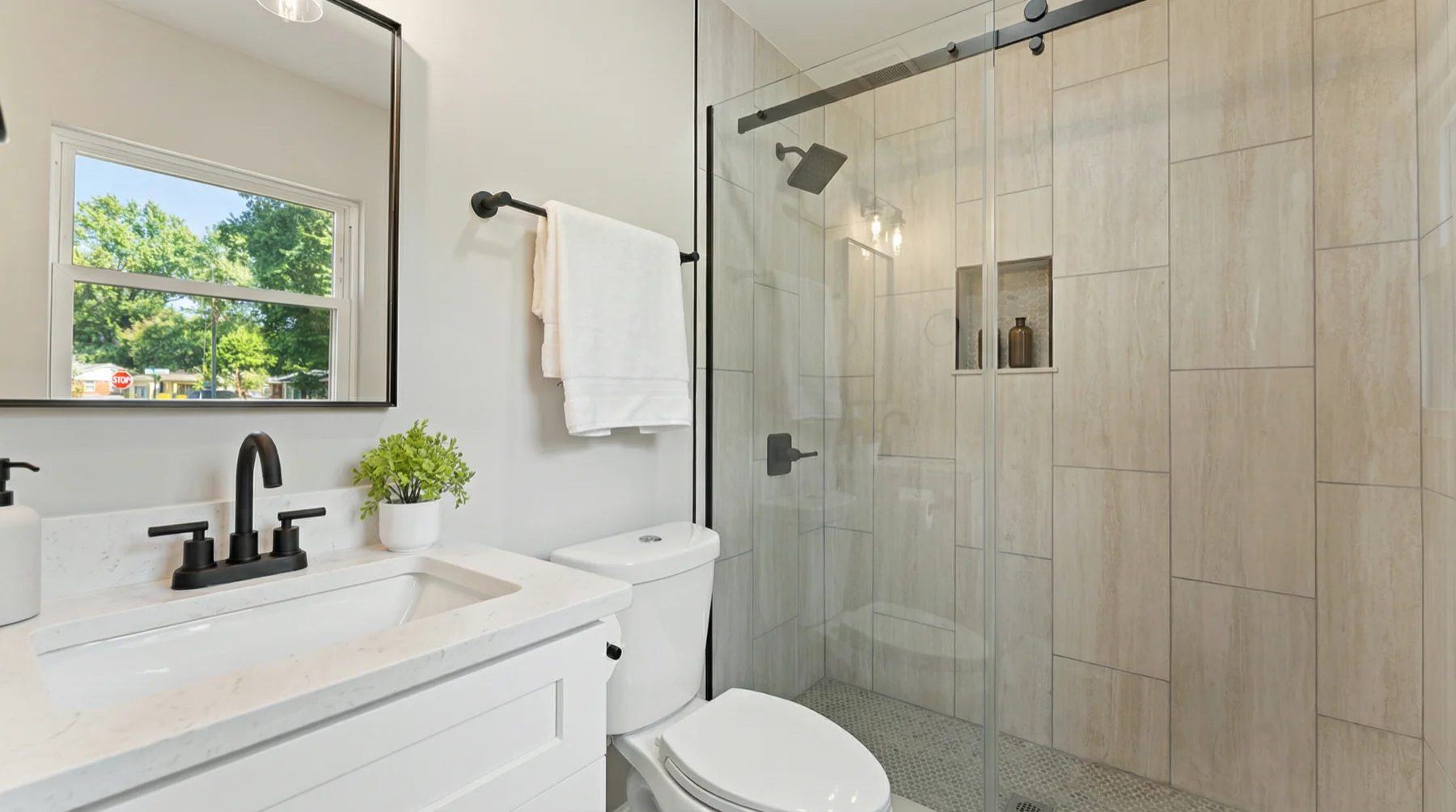
Ceramic and porcelain tile cost about $10 to $50 per square foot nationally, before labor. But the tile itself is the cheap part. Most of the money, and most of the risk, goes into what sits behind it: the membrane, the mortar and a flat, sloped base.
So the smart move for a tight budget is simple. Buy mid-range tile and spend on what you can’t see. And if your shower already has tile, check whether it only needs new grout before you pay for a full redo.
Below you’ll find what tile costs by material, what to buy for each surface, the layers we never cut, where you can save, and how to tell a grout repair from a real problem.
What Bathroom Tile Installation Costs in 2026
Here’s where the money actually goes. These are national guide numbers, because no public source tracks tile prices for Charlotte alone. Use them to read a quote, not to replace one. Tile prices cover the tile only; labor is its own line.
| Item | Cost per sq ft | Source |
|---|---|---|
| Ceramic tile | $10 to $25 | This Old House |
| Porcelain tile | $15 to $50 | This Old House |
| Natural stone | $25 to $60 | This Old House |
| Glass tile | $35 to $60 | This Old House |
| Labor only | $4 to $15 | Fixr |
| Removing old tile | $2 to $5 | Fixr |
According to This Old House, a tiled shower averages $3,504 and ranges from $1,335 to $5,005. Fixr puts it at $1,800 to $5,000, with an average of $2,700.
Why don’t the ranges match? Each guide counts different things. Some include demolition and waterproofing, some don’t. When you compare two quotes, check that both cover the same layers.
For us, tile is usually part of a bigger bathroom job. Our bathroom remodels start at $5,000 for smaller updates, and our Refreshing Update package starts at $12,000 with 12x24 ceramic floor tile or LVP.
Want a real number for your bathroom? We measure the room, look at what’s behind the old tile and write the estimate line by line. Request your in-person estimate or see what our bathroom remodeling in Charlotte covers.
For the full budget, with vanities, fixtures and labor, see our Charlotte bathroom remodel cost guide.
Porcelain vs. Ceramic vs. Natural Stone: What to Buy for Each Surface
You don’t need one tile for the whole room. Each surface asks for something different, and matching the tile to the job is where you save without losing quality.
| Surface | What it needs | Smart pick |
|---|---|---|
| Walls outside the shower | Looks, easy cleaning | Ceramic, the budget winner |
| Shower walls | Water resistance, few weak spots | Ceramic or porcelain over a membrane |
| Shower floor | Grip when wet, follows the slope | Small porcelain tile or mosaic |
| Bathroom floor | Strength, grip, flat install | Porcelain, standard or large format |
Porcelain is denser than ceramic and absorbs less water, so it handles floors and heavy use better. It also comes in looks that pass for marble or stone at a lower price and with less upkeep.
Ceramic is softer and cheaper. On a wall that never sees standing water, it does the job for years. This is the easiest place in the room to save.
Natural stone looks great and asks for more. It costs more to buy and install, needs sealing, and polished stone gets slippery. If you love it, use it on one wall or a vanity backsplash.
What to look for on the box
On the shower floor, ask for the tile’s wet DCOF rating, which measures slip resistance. According to Crossville, wet interior floors call for a wet DCOF of 0.42 or greater, and shower floors fall in a higher category for standing water.
If the box or spec sheet doesn’t list it, ask before you buy. A tile that looks right in the store can be the wrong tile for a wet floor.
Large Format vs. Mosaic: Fewer Grout Lines or Better Grip?
Large tiles mean fewer grout lines, which means less to scrub. Small tiles mean more grout lines, which means more grip. The right answer depends on the surface.
- Large format on walls: fewer lines, a cleaner look, and less grout to keep clean.
- Large format on the bathroom floor: works well, but only on a floor that is truly flat.
- Mosaic on the shower floor: follows the slope to the drain and gives your feet more grip.
- Mosaic everywhere: costs more. Fixr says mosaic runs about 10% more to install, and This Old House notes that intricate patterns like herringbone need more cutting and time.
The catch with big tiles is the floor under them. According to TileLetter, for tiles longer than 15 inches on one side, the surface can’t vary more than 1/8 inch in 10 feet. An uneven floor makes edges stick up and tiles crack.
So if you want large tile on an older floor, budget for leveling first. Our tile floor installation always starts with checking the floor.
What Goes Behind the Tile (and Why We Never Cut It)
This is the part we don’t cut corners on. A shower can look perfect on day one and still be failing behind the tile. These layers are what keep water out of your walls.
- A waterproof membrane in the wet area. Cement board resists water but is not waterproof. The tile industry handbook, quoted by DIYTileGuy, says a waterproof membrane or vapor retarder must be specified.
- Full mortar coverage. TileLetter cites 95% coverage in wet areas and 80% elsewhere. Gaps under a tile leave room for water and cracks.
- A real slope to the drain on the shower floor, so water never sits.
- A flat floor under large tile, as above.
- Cure time. Fixr recommends waiting at least three days before using a new shower.
Ask any quote to name the membrane brand and say how the shower gets tested before tile goes on. If it isn’t in writing, it may not be in the price.
Bigger bathroom jobs taught us that a tile job is won or lost before the first tile goes up. Now every remodel starts with the layers nobody will ever see.
Epoxy vs. Cement Grout: Where Each One Makes Sense
Grout is cheap to choose well and expensive to fix later. According to Fine Homebuilding, cement grout joints need sealer and epoxy joints don’t.
| Cement grout | Epoxy grout | |
|---|---|---|
| Cost to regrout | $5 to $7 per sq ft | $8 to $12 per sq ft |
| Sealing | Needs sealer | No sealer needed |
| Stains | Can stain over time | Resists stains |
| Best place | Walls that dry out | Shower floor and lower walls |
Regrout prices come from This Old House and are national.
A good mix for a tight budget: epoxy where water sits, cement grout on the dry walls. You pay for epoxy only where it earns its cost.
Where You Can Save Without Losing Quality
If you’re going to save somewhere, save here.
- Mid-range porcelain or ceramic instead of stone. Porcelain that looks like marble gives you the look for less, with no sealing.
- Standard sizes and simple layouts on the walls. Straight or stacked layouts take less cutting than herringbone or mosaic.
- One detail you’ll see every day. A niche or a single accent strip reads better than mosaic across the whole shower.
- Cement grout on dry walls. Save the epoxy for the floor.
- Keep the valve and drain where they are. If they have to move, that pipe work is done by the right trade, and it adds cost and days. We coordinate it so you don’t have to.
- Repair before you replace. If the tile is solid, new grout may be all your shower needs. More on that below.
Expensive Mistakes to Avoid
These are the choices that turn a tile job into a bigger repair a few years later.
- Skipping the membrane because the wall is “cement board anyway.”
- Large tile on an uneven floor without leveling first.
- Polished stone or glass on the shower floor. This Old House warns that both get slippery.
- New grout over old grout. Fixr is direct about it: this causes cracking. The old grout has to come out.
- Rushing the cure so the shower can be used sooner.
- Changing the tile after work starts. A late swap means new cuts, new trim and lost days.
Shower Tile Repair or Full Redo?
A lot of showers that look tired don’t need a full redo. The symptom tells you which job you’re facing. Prices below are national.
| What you see | What it usually needs | Typical cost |
|---|---|---|
| Stained grout, no cracks | Color sealing | From about $500 per shower (Fixr) |
| Cracked or missing grout, tile is solid | Regrout: old grout out, new grout in | $560 to $880 (Fixr); $600 to $2,500 (This Old House) |
| One or two cracked tiles | Replace those tiles | Depends on matching tile; free estimate from photos |
| Hollow-sounding tile, soft wall, loose handle, musty smell | Open the wall and check the membrane and backing | Retiling a shower averages $3,504 (This Old House) |
How do you check for water behind the tile? This Old House suggests tapping the tiles gently with a rubber mallet. A hollow sound means the tile has lost its bond.
Other warning signs: grout that stays dark, peeling paint on the wall next to the shower, and spots that give when you press them. If you see those, regrout won’t fix it. The problem is behind the tile.
According to Fixr, regrouting a shower averages $700. That’s a small fraction of a redo, which is why it’s worth checking first.
Not sure which one your shower needs? Text a few photos to (980) 391-6833 or send them through our contact page. We usually reply with an estimate within 24 hours. The estimate is free, and you get the price before any work starts.
How Long Tile Work Takes
| Job | Typical time | Source |
|---|---|---|
| Tile a shower | 2 to 4 days | This Old House |
| Wait before using a new shower | At least 3 days | Fixr |
| Full bathroom remodel | 2 to 4 weeks | Our remodel process |
Tile is one stage of a bigger remodel. If you’re also swapping the tub for a walk-in shower, our guide to tub to shower conversion in Charlotte compares the three price paths.
To keep the calendar tight, have the tile, trim and grout on site before demo day. A missing box of tile stops the job until it arrives.
Get a Real Number for Your Bathroom
National ranges get you started. A real number needs someone to look at your walls, your floor and what’s behind the old tile.
For a remodel, we come to your home, walk the bathroom with you and write the estimate line by line, so you see what goes into the tile and what goes behind it. For a small tile or grout repair, photos by text are usually enough to start.
Request your in-person estimate, or call or text (980) 391-6833. iFIXX is locally owned and insured, and we work across South Charlotte, Ballantyne, Matthews, Mint Hill, Pineville, Waxhaw and Weddington.
Bathroom Tile Installation: Common Questions
How much does bathroom tile installation cost per square foot?
Nationally, This Old House puts ceramic tile at $10 to $25 per square foot and porcelain at $15 to $50, before labor. Labor alone runs about $4 to $15 per square foot according to Fixr, and removing old tile adds about $2 to $5.
How much does it cost to tile a shower?
Fixr puts shower tiling at $1,800 to $5,000, with an average of $2,700. This Old House reports an average of $3,504, from $1,335 to $5,005. Both are national guide numbers. Size, tile choice and the state of the walls move the price.
Is porcelain or ceramic better for a shower?
Both work on shower walls when the waterproofing behind them is done right. Porcelain is denser and tougher, so it is the safer pick for floors and heavy use. Ceramic costs less and is a smart choice for walls outside the wet area.
Is epoxy grout worth it in a shower?
Often, yes, on the shower floor and the lower walls. Epoxy grout needs no sealer and resists stains, according to Fine Homebuilding. Cement grout costs less and works well on walls that dry out, but it needs sealing.
Do you need a waterproof membrane behind shower tile?
Yes. Cement board handles water but is not waterproof. The tile industry handbook calls for a waterproof membrane or vapor retarder behind tile in wet areas. This is the one layer you should never let a quote skip.
Can I regrout instead of replacing shower tile?
If the tile is solid and only the grout is cracked or missing, yes. Regrouting a shower runs $600 to $2,500 according to This Old House. If tiles sound hollow or the wall feels soft, the problem is behind the tile and regrout will not fix it.
How long does it take to tile a bathroom?
A professional usually finishes a shower in 2 to 4 days, according to This Old House. Fixr recommends waiting at least three days before using a new shower so everything can cure.
Are large tiles good for a shower floor?
Usually not. A shower floor slopes toward the drain, and small tiles follow that slope better and give more grip from the extra grout lines. Large tiles work great on shower walls and on the bathroom floor, if the floor is flat.
Need Help With Your Home?
Our team of experts is ready to help with any repair or remodeling project.
Our Services
Need help with a project? We offer expert repair and remodeling services throughout Charlotte.