Wood Rot Repair in Charlotte (2026): Epoxy, Patch or Replace Your Window Sills, Trim and Deck Boards
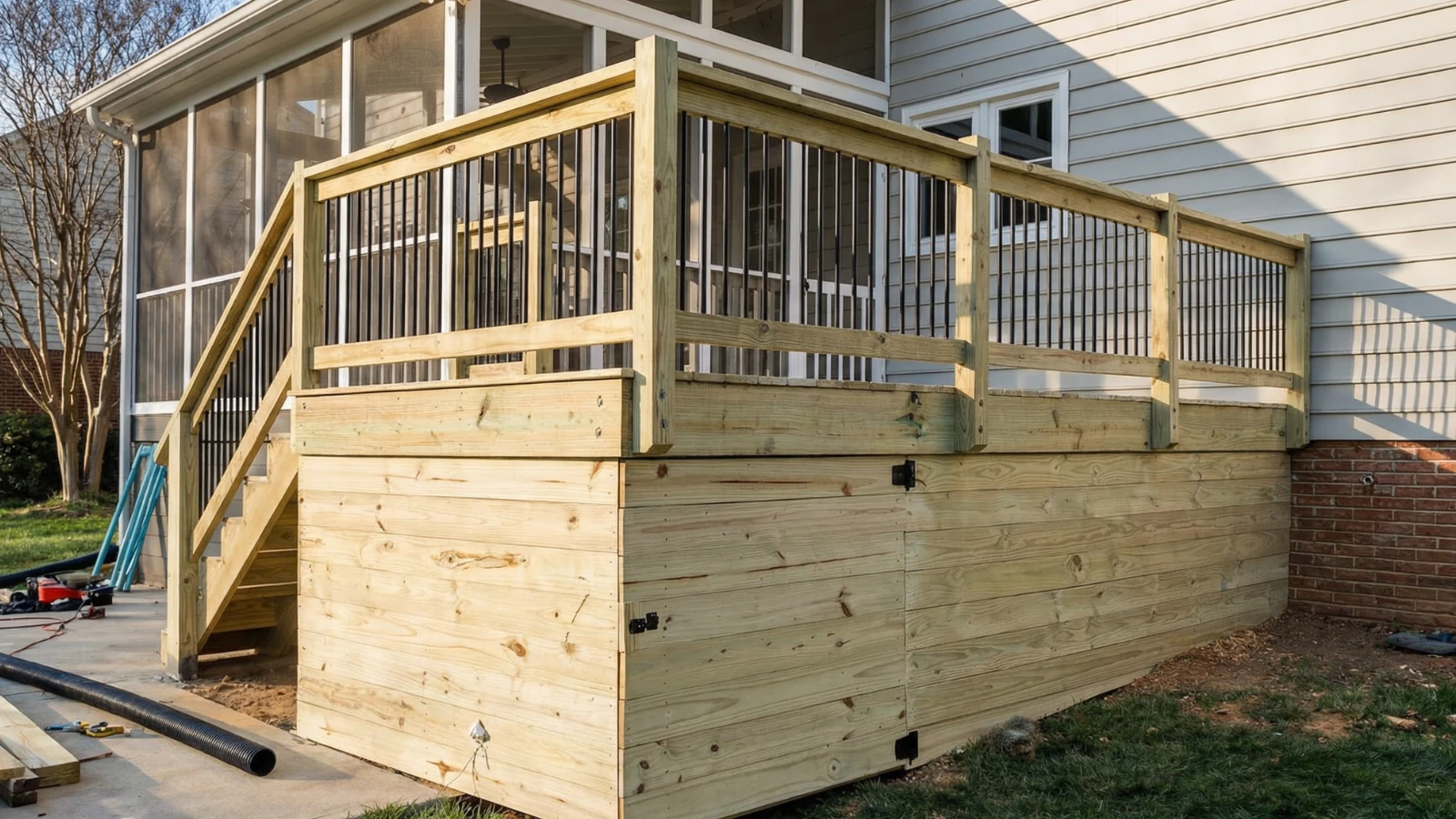
Use epoxy when the rot is small, the wood is dry and the piece still holds its shape. Patch in new wood when a section is gone but most of the piece is sound, and replace the whole sill, trim board or deck board when the rot runs through it or reaches anything structural.
That’s the whole decision in three steps. The rest of this guide shows how to tell which step you’re on, what each one costs, and why the water has to be fixed before any of them.
We repair rotten wood around Charlotte: window sills, exterior trim, door frames, deck boards, railings, posts and steps. We repair the wood around the window; we don’t sell or replace windows. So we have no reason to push you toward a bigger job than you need.
Why Wood Rots in Charlotte
Rot is a fungus, and it needs water. According to NC State Extension, decay fungi stop growing once wood moisture drops below 20%. Wood that stays soaked, around 30%, rots.
Charlotte gives those fungi plenty to work with. The National Weather Service puts normal rainfall at the airport at 43.6 inches a year, and recent years have run wetter, with 59.2 inches in 2018.
Heat helps too. According to JLC, decay fungi grow best between 70°F and 90°F, which describes most of a Charlotte summer.
Pressure-treated wood is not immune. The treatment doesn’t reach the center of every board, so water that gets in through cracks, cut ends and screw holes can still rot it from the inside.
Rot almost always starts where water sits and the wood can’t dry:
- The flat top of a window sill and the joint where it meets the side trim
- The bottom of door frames and exterior casing
- Deck board ends and the boards against the house
- The base of deck posts, where mulch and sprinklers keep them wet
- Stair stringers and the bottom step
Rot or Termites? How to Tell
Push a screwdriver into the soft spot and look at what comes out. Rot looks dark, stringy or crumbly, and it often breaks into small cubes as it dries.
Termites leave something different. According to NC State Extension, eastern subterranean termites live in every county in North Carolina, and mud inside the wood points to them, not just water.
If you see mud tubes or mud packed inside the wood, call a pest control company before anyone repairs the wood. Fixing the board first just gives the termites a new meal.
Mold and mildew on the surface are a different thing again. NC State notes that mold and mildew don’t rot wood.
Epoxy, Patch or Replace: The Three-Step Ladder
Every rot repair is one of three jobs. The trick is picking the smallest one that actually holds.
| Fix | When it works | How long it lasts | Typical cost (outside Charlotte) |
|---|---|---|---|
| Epoxy (consolidant + filler) | Small, local rot; dry wood; not structural | Far longer than rigid fillers, according to This Old House | $218 to $400 on trim, casing or a sill (Mr. Handyman, Tampa); $35 to $200 in materials if you do it yourself (This Old House) |
| Patch in new wood | A section is gone, but most of the piece is sound | As long as the wood around it, if it’s sealed and stays dry | $350 to $700 for a partial section of fascia, door frame or window casing (Mr. Handyman, Tampa) |
| Replace the piece | Rot runs through it, more than 10% of a sill, soft deck boards | Like new wood; longer with PVC on sills and trim | $540 to $1,200 for a full board or frame (Mr. Handyman, Tampa); $800 to $1,464+ if it reached structural framing |
The prices in the table come from a Mr. Handyman cost guide for the Tampa Bay area published in August 2026, and from This Old House. Nobody publishes a Charlotte price list, so use them as a reference, not a quote.
Not sure if your sill can be saved? Text photos to (980) 391-6833 or request an estimate, and a person gets back to you with a price, usually within 24 hours. You can also see what our rotten wood replacement and carpentry work covers.
Step 1: Epoxy
Epoxy is a two-part repair. First a thin consolidant soaks into the soft wood and hardens it. Then an epoxy filler rebuilds the missing shape, and it gets sanded and painted like wood.
It only works on dry wood. This Old House warns that epoxy will not bond properly with moist wood, and Abatron prefers moisture below 18%.
Epoxy is the right call for a soft corner on a sill, a rotted spot at the bottom of a door casing or a small hole in trim. It’s the wrong call for anything that carries weight.
Step 2: Patch in new wood
When a section is too far gone for filler, the rotten part gets cut out to clean wood and a new piece is glued and fastened into the gap. Carpenters call this a dutchman.
You keep the original piece, its profile and its paint lines, and you only pay for the part that failed. It works well on long sills, door frames and wide casing where the rot is at one end.
Step 3: Replace the piece
Some pieces aren’t worth saving. A deck board that’s soft across its width, trim that crumbles end to end, or a sill rotted past the 10% line gets replaced.
Replacing one piece is still far smaller than replacing the window, the door or the deck. And it’s the moment to upgrade to a material that can’t rot.
Window Sills: Repair the Sill, Not the Whole Window
The biggest fear we hear is being told a soft sill means a new window. Most of the time it doesn’t. The sill is wood that sits under the window, and wood can be repaired or replaced on its own.
This Old House gives a clear line: if more than 10 percent of the sill is rotten, the old sill should be cut off and replaced. Below that, the bad wood comes out and gets filled or patched.
For a replacement sill, This Old House used cellular PVC, which doesn’t rot. The material ran about $6.75 per foot plus a $74 adhesive kit, at national prices.
The window itself becomes the question only when the rot has moved past the sill into the frame and the opening around it. If that’s the case, we tell you, and you’ll need a window company for the unit. We repair the wood around the window; we don’t sell or replace windows.
Exterior Trim and Door Frames
Rot on trim usually starts at a joint: where the side casing meets the sill, at the bottom of a door frame, or anywhere caulk has cracked and let water in behind the paint.
Small spots get epoxy. A rotted bottom on a door frame or casing usually gets a new section spliced in, which keeps the rest of the frame and the door hanging where it is.
When a whole trim board is gone, it gets replaced. On the pieces that see the most water, PVC trim is worth asking about, because it takes paint like wood and doesn’t rot.
Deck Boards, Railings and Posts
On a deck, epoxy has a small role. A soft board gets replaced, because a deck board carries people. The good news is that replacing a few boards is a normal repair, not a new deck.
While the boards are up, someone should check the joists underneath. A soft board sometimes means the framing below needs attention too. Our wood rot deck repair always includes that look.
Posts, beams and the ledger where the deck meets the house are structural. Those never get filled with epoxy. If rot has reached them, they get replaced, and that part gets priced as its own job.
Use the right lumber for the replacement. According to Pro Remodeler, a revised treated-lumber standard may require ground-contact wood on deck ledgers, beams, joists, railing posts and railings, depending on how it is read.
New boards look different from weathered ones until the deck gets refinished. If you want the whole deck to match, deck staining and sealing goes after the repair, not before.
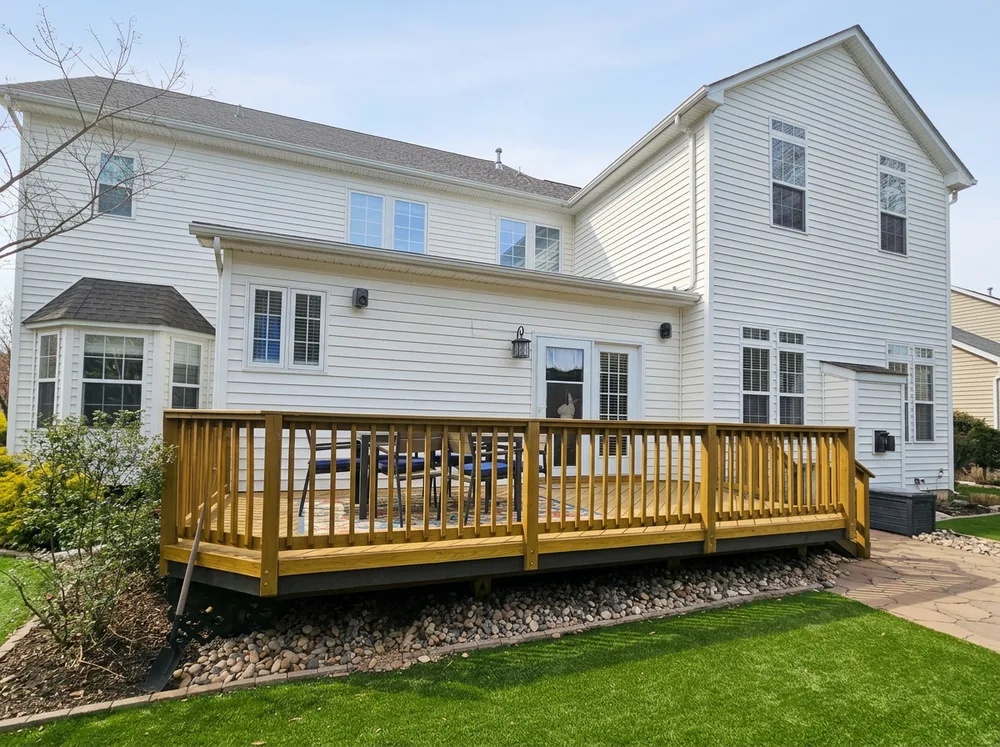
If the rot is widespread and you’re weighing a full rebuild, our Charlotte deck cost guide shows what repairs and new decks run before you decide.
What Wood Rot Repair Costs
Here’s where the money actually goes. Using the Mr. Handyman Tampa Bay guide as a reference:
- Epoxy on trim, casing or a sill: $218 to $400
- Partial section of fascia, door frame or window casing: $350 to $700
- Full board or frame replacement: $540 to $1,200
- Rot in rafter tails, sill plates or load-bearing framing: $800 to $1,464 or more
Those are Tampa numbers, not Charlotte numbers, and your price depends on how far the rot goes once the wood is open. The estimate is free, and you get the price before any work starts.
Doing epoxy yourself costs less. This Old House puts materials at $35 to $200 and the work at 1 to 8 hours. It’s a fair DIY job on a small sill spot. It’s not a DIY job on a post or a stair stringer.
About insurance: Policygenius says wood rot is typically not covered unless a covered peril in your policy caused it. Rot from a slow leak or years of weather is usually on you.
Fix the Water First
A repair over a wet spot fails again. Before anyone fills or replaces wood, find where the water comes from. In Charlotte, it’s usually one of these:
- A clogged or overflowing gutter dumping water on a sill or a deck
- A downspout that empties against the house or the deck
- Sprinklers hitting the trim, posts or siding
- Mulch or soil piled against posts and door frames
- Cracked caulk or paint on a sill that lets water sit inside
- A roof or flashing leak above the trim
Some of those we handle as part of the repair, like caulk, paint and clearing mulch away from a post. A leaking roof or a failed gutter may need another trade, and we’ll tell you so you know who to call.
Where to Save and Where Not to Cut Corners
If you’re going to save somewhere, save here:
- Repair the sill instead of replacing the window, when the rot hasn’t reached the frame.
- Use two-step epoxy instead of rigid filler on small spots. It flexes with the wood and lasts longer.
- Patch a section instead of replacing a long piece when most of it is sound.
- Replace only the soft deck boards, not the whole deck surface.
- Use PVC for replacement sills and trim in spots that stay wet.
This is the part we don’t cut corners on:
- Stopping the water. Without that, every repair is temporary.
- Drying the wood before epoxy goes on.
- Removing everything soft. Rot left behind keeps spreading under the filler.
- Paint and seal, edges included. The sealed edge is what keeps the repair dry.
- No epoxy on posts, beams or ledgers. Structural wood gets replaced.
What to Ask Before You Sign an Estimate
Ask for every answer in writing:
- Which fix they propose (epoxy, patch or replace) and why.
- What happens if the rot is bigger once the wood is open, and at what price.
- What causes the water and who fixes it.
- The replacement material: treated lumber, ground-contact lumber, PVC, and the epoxy brand.
- Whether paint or sealing is included.
- The labor warranty, and what it covers.
If someone tells you a soft sill means a new window, ask them to show you how far the rot goes. A fair answer comes with a screwdriver test and photos.
Get a Real Price for Your Rotted Wood
Ranges only go so far. The fastest way to know which step your sill, trim or deck board needs is to show it to someone.
Text photos of the soft spot to (980) 391-6833 with a wide shot and a close-up, or request an estimate through our site. A person gets back to you with a price, usually within 24 hours. Bigger jobs, and anything structural, get a visit first.
The estimate is free, and iFIXX is locally owned and insured. We work across South Charlotte, Ballantyne, Matthews, Mint Hill, Pineville, Waxhaw and Weddington.
Wood Rot Repair in Charlotte: Common Questions
How much does wood rot repair cost in Charlotte?
There is no published Charlotte price list. In Tampa, Mr. Handyman lists $218 to $400 for epoxy on trim or a sill, $350 to $700 for a partial section and $800 to $1,464 or more for structural rot. Our estimates are free, and you get the price before any work starts.
Can rotted wood be repaired with epoxy?
Yes, when the rot is small, the wood is dry and the piece is not structural. A consolidant goes in first, then an epoxy filler. This Old House says epoxy lasts far longer than rigid fillers, but it will not bond properly to moist wood.
When should a window sill be replaced instead of repaired?
This Old House uses a simple rule: if more than 10 percent of the sill is rotten, cut it off and replace it. Below that, cutting out the bad wood and filling or patching it usually holds.
Do I need to replace the whole window if the sill is rotted?
Usually not. A rotted sill is a wood repair. The window only becomes the question when the rot reaches the frame and the opening around it. We repair the wood around the window; we don't sell or replace windows.
Is it wood rot or termites?
Look inside the damaged wood. NC State points to mud inside the wood as a sign of subterranean termites, which live in every county in North Carolina. Rot alone is soft, dark or crumbly wood with no mud. If you see mud, call a pest control company first.
Why is my pressure-treated deck rotting?
The treatment does not reach the center of every board, and water gets in through cracks, cuts and screw holes. Board ends, the boards against the house and the base of the posts stay wet the longest, so that is where rot starts.
Does homeowners insurance cover wood rot?
Rarely. Policygenius says wood rot is typically not covered unless a covered peril in your policy caused it. Rot from a slow leak, humidity or wear over time is usually excluded. Call your insurer if a sudden event started it.
How do I stop wood rot from coming back?
Stop the water first: gutters, leaks, sprinklers and mulch against posts. Then let the wood dry, remove everything soft, fill or replace, and paint or seal the repair, edges included. NC State says rot fungi do not grow below 20% wood moisture.
Need Help With Your Home?
Our team of experts is ready to help with any repair or remodeling project.
Related Articles
Our Services
Need help with a project? We offer expert repair and remodeling services throughout Charlotte.